


Football League 2026
MOBILE SOCCER
I spent time with Football League 2026 as a quick, accessible soccer game rather than treating it like a full console simulation. That distinction matters. The game is built around the simple idea of putting together a team and playing football matches, but its real appeal is how easily it fits into short sessions. I can pick it up when I have a few minutes, make progress, and put it down without needing a long setup.
It is a free sports game from MOBILE SOCCER, available for Android devices running at least Android 5.0. The game has reached over 100 million installs and holds a 4.5 average from around 1.6 million ratings, which gives a useful picture of its broad appeal. Those numbers do not automatically make it the right choice for everyone, but they do suggest that the format is easy for a large audience to understand.
What interested me most was how well it works on a shared phone or tablet. In a household, one person can play a match during a break, while another can use the same device later. That convenience comes with an important catch: I would not assume that separate players have completely separate progress unless the device and game setup clearly provide that separation. For shared use, agreeing on who plays when and what progress belongs to whom is more important than it might seem.
Related News

How Football League 2026 fits into everyday play
A practical shared-device game
The strongest everyday use case is a short, informal session. Imagine a family tablet in the living room. One player has a few minutes before dinner, another wants a turn afterward, and nobody wants to start a complicated game that demands a long commitment. This is where the straightforward football format makes sense. You can focus on the match, make a few team decisions, and hand the device over without turning the evening into a major gaming event.
I also found the game suitable for people who enjoy sports games but do not want to learn an enormous control system immediately. The store summary focuses on building a dream soccer team, and that gives the experience a clear direction: assemble a squad, improve the team through play, and return for another match. It is easier to explain to a younger or less experienced player than a large simulation with dozens of menus and specialist settings.
Related News

Why WhatsApp Messenger Still Makes Everyday Communication Feel Easy

Jurassic World: The Game Is the Better Dino Tycoon for Strategic Players

Threads in Real Life: Who Should Join, Lurk, or Leave

How SHEIN Turned Shopping Into an Endless Content Feed

How to Make Fortnite Feel Smarter on Mobile

Should You Switch to Microsoft Outlook on Mobile?
That simplicity should not be confused with unlimited depth. Players who expect the detailed tactical control, licensed presentation, or highly realistic match management found in premium console football games may find this experience lighter. I see it as a mobile-first alternative for quick entertainment, not a replacement for every other soccer title.
What the team-building focus changes
Building a team gives the game a useful reason to keep playing beyond one isolated match. I am not only trying to win the current game; I am also thinking about how the squad feels over time. That creates a small planning layer, especially for players who enjoy deciding where to spend attention and which improvements matter most.
My advice is to avoid changing everything at once. When a team-building game gives you several possible ways to improve, it is tempting to chase every upgrade immediately. A better approach is to notice the weakness that repeatedly affects your matches, then concentrate on that area. This keeps the progression easier to understand and reduces the feeling that you are making random decisions.
Gallery
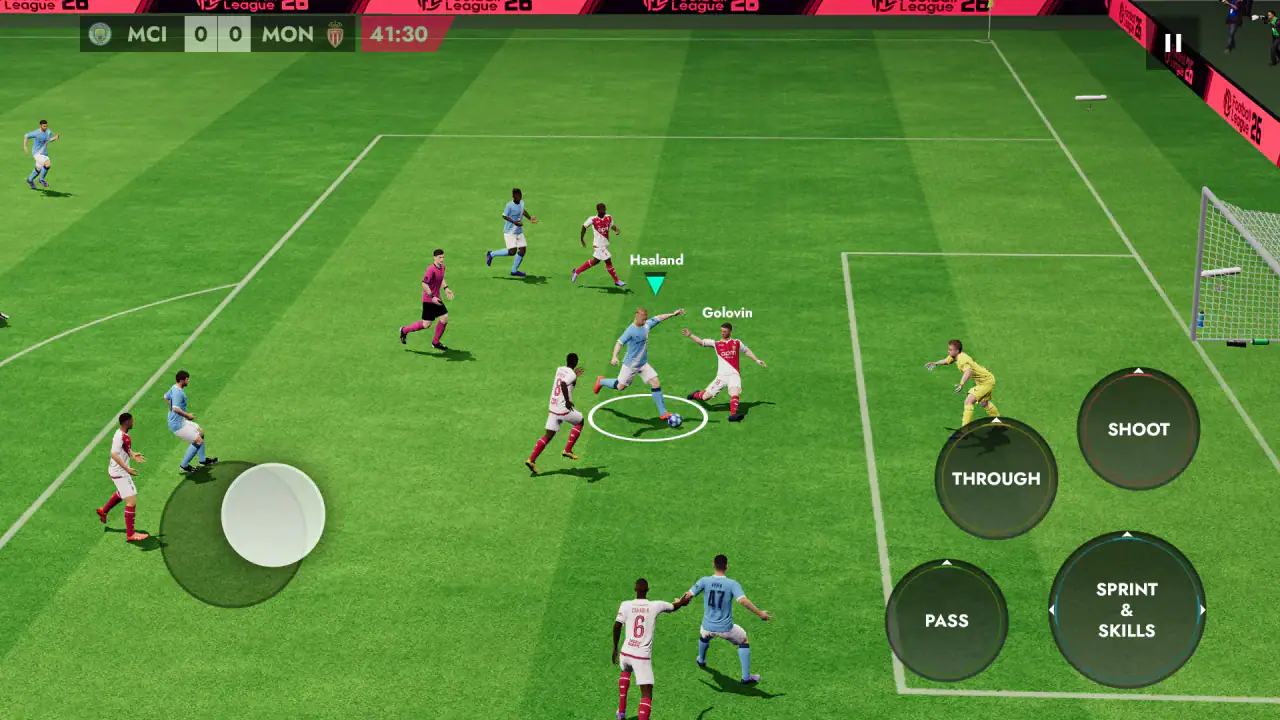
That approach is particularly helpful on a shared device. If several people are using the same team, constant changes can make it difficult to know who made which decision. A simple household rule—one person manages the squad at a time, or everyone agrees before making a major change—can prevent arguments that have nothing to do with the football itself.
Starting without overcomplicating the session
For a first session, I would not begin by trying to master every available option. I would play a match, observe how the controls respond, and only then spend time on team management. This order helps separate two questions that are easy to mix together: whether the match action feels comfortable and whether the longer-term squad loop is enjoyable.
The game is free to download and play, which makes it easy to test without an initial purchase. It does include in-app purchases priced at $4.99 per item. I would treat those purchases as a reason to set expectations before handing the device to someone else, especially a child. A free game can still create spending decisions, and a shared tablet makes it harder to tell who initiated something unless the household already has a clear rule.
Boundaries before another person plays
My biggest practical recommendation is to establish ownership of progress before sharing the game. If two people use the same installation, they should know whether they are continuing one team or taking turns with a common save. I would not let several players make squad decisions casually and then try to reconstruct who changed what later. That is an avoidable source of frustration.
For a personal device, the situation is simpler: I can treat the team as my own project and make decisions without checking with anyone. On a family device, I would keep a short agreement in place. Decide who is allowed to spend money, whether purchases are off-limits, and whether team changes need permission. These are household boundaries rather than game features, but they make a noticeable difference to the experience.
I would also avoid presenting the game as an educational tool or as a safe substitute for supervision. Its content rating is Everyone, so it is positioned for a broad audience, but age suitability is only one part of responsible shared use. A younger player may understand the football quickly while still needing an adult to explain purchases, device time, and the difference between a game reward and something that has real cost.
Keeping coordination simple
Coordination works best when it is specific. “Do not change anything” is too vague for a team-building game. A clearer arrangement might be that one player handles squad decisions while another only plays matches, or that each person gets a defined session and leaves the team exactly as they found it. The right choice depends on the household, but clarity is more useful than a complicated schedule.
If several people are interested in the game, I would encourage them to talk about strategy rather than silently competing over the same progress. One player may prefer immediate match performance, while another may enjoy long-term squad development. Those goals can coexist if everyone understands which decisions are shared and which are personal.
This is also where the game’s quick-session nature helps. A short turn is easier to coordinate than a long campaign. Someone waiting for the device does not necessarily have to sit through an extended commitment. On the other hand, a player who wants uninterrupted time for careful team planning may prefer using a personal device, because shared use naturally introduces interruptions.
Age context and trust
The Everyone rating makes Football League 2026 a reasonable candidate for a broad household audience, especially when the main interest is soccer rather than mature storytelling or complicated role-playing systems. I would still introduce it differently to different ages. A younger player may need help with the menus and spending boundaries, while an older player may want to understand how much control the game gives over the squad before investing time in it.
Trust matters more than technical knowledge in a shared setup. If a child is allowed to play independently, I would make the purchase rule explicit instead of assuming the child knows which buttons have financial consequences. If an adult shares the device with another adult, the concern may be less about supervision and more about preserving each person’s progress and avoiding accidental changes.
I would also be careful about promising that every player will enjoy the same part of the game. One family member may like the matches, another may enjoy building the squad, and a third may lose interest once the novelty fades. The game works best when those differences are accepted rather than treated as a problem. It is a casual sports option, not a guaranteed group activity.
Performance expectations and compatibility
The minimum operating-system requirement is Android 5.0, so the game is not restricted to only the newest Android hardware. That broad compatibility is useful for households with an older spare phone or tablet. Still, the operating-system requirement alone does not tell me exactly how every device will feel during play. Screen size, hardware condition, storage space, and general device performance can all affect comfort.
For that reason, I would test the game on the actual shared device before promising it as the household’s main football game. A phone may be perfectly usable for one person but awkward when passed around, while a tablet may offer a more comfortable view but be less convenient for quick sessions. The best setup is the one that lets players see the action clearly and handle the controls without crowding the screen.
The current version is 0.1.70. When I review a mobile game, I pay attention not only to the version number but also to whether the overall experience feels stable enough for the way I plan to use it. For a shared device, updates can also affect routines, so I would leave enough space and time for normal maintenance instead of waiting until someone is ready to play.
Where it beats the usual alternatives
Compared with a large, premium football simulation, this game is easier to approach and less intimidating for a casual player. I do not need to understand a full professional-management structure before enjoying the basic idea. That makes it a better fit for a quick match, a younger player, or someone who wants team-building without committing to a long console-style session.
Compared with a purely arcade soccer game, the squad-building angle gives me more reason to return. The team becomes part of the experience, so the game is not only about reacting to what happens during one match. That extra layer is useful for players who like gradual improvement and small decisions between games.
The trade-off is that neither side of the comparison should be ignored. It is not the best choice if I want the deepest tactical simulation, and it may not be the best choice if I want completely instant action with no management layer. Players who dislike progression systems may find the team-building focus distracting, while players who want extensive realism may find it too streamlined.
Three habits that make the experience better
First, I would play a few matches before spending money. The free entry makes that possible, and it gives me time to decide whether the controls and progression actually suit me. This is especially important because the purchase price of $4.99 per item can feel small in isolation but become significant if several people use the same device and make separate decisions.
Second, I would keep team changes deliberate. Instead of upgrading or rearranging the squad after every result, I would look for patterns across several matches. A single disappointing game can make me blame the wrong part of the team. Waiting until a weakness appears repeatedly leads to better decisions and makes the progression feel less random.
Third, I would separate “playing a match” from “managing the team” when sharing. That division gives each person a clear role and makes it easier to hand over the device. It also protects the player who enjoys planning from having their decisions overwritten by someone who only wanted a quick game.
Who should choose it, and who should skip it
I would recommend Football League 2026 to someone who wants a free mobile soccer game with a team-building goal, short-session flexibility, and a low barrier to entry. It is a sensible option for casual sports fans, households looking for an accessible football game, and players who like improving a squad without starting with a highly technical simulation.
I would be more cautious about recommending it to someone who wants a completely separate profile for every family member, extensive control over every part of a professional club, or a premium experience without purchase prompts. I would also point serious football-simulation fans toward a more detailed alternative if realism and tactical precision matter more than convenience.
For children, I would recommend it only alongside a clear household agreement about device time and purchases. The Everyone rating is reassuring for the general content, but it does not remove the need for adults to explain spending and shared progress. The game can be family-friendly in tone while still requiring sensible boundaries around how it is used.
My household verdict
After using it as both a personal game and a possible shared-device activity, I think its best quality is flexibility. I can approach it casually, but the team-building loop gives me enough structure to return later. It is not trying to replace every kind of football game, and I would not judge it by the standards of a full console simulation.
The main friction comes from shared ownership. If several people use one installation without agreeing on progress, purchases, or squad changes, the game can create household tension more quickly than the matches themselves. That is not a reason to avoid it; it is a reason to set boundaries before the first serious team decision.
With those expectations in place, I find it easy to recommend as a free sports game for Android users who want accessible football and a reason to keep developing a squad. MOBILE SOCCER has made something broad and approachable, and the large audience reflected by its rating and install figures supports that impression. My final advice is simple: try it for the matches first, learn whether the team-building layer keeps you interested, and decide in advance how the shared device will be handled.
My recommendation: choose it for convenient, casual soccer with a progression angle; skip it when you need deep simulation, strict personal account separation, or a completely purchase-free household experience.
FAQs for Football League 2026
What are the system requirements for Football League 2026?
To run Football League 2026 smoothly, you need a device with at least 4GB of RAM and a quad-core processor. For Android, it requires Android 8.0 or higher, while iOS users need iOS 12.0 or later. Ensure you have at least 2GB of free storage space for optimal performance.
Does Football League 2026 support multiplayer mode?
Yes, Football League 2026 offers a robust multiplayer mode. You can connect with friends or join random players worldwide. The game features both local Wi-Fi matches and online tournaments, allowing you to compete for rankings and earn exclusive rewards.
Are there in-app purchases in Football League 2026?
Football League 2026 includes in-app purchases to enhance your gaming experience. Players can buy coin packs, unlock premium teams, and purchase exclusive gear. However, the game is designed to be enjoyable even without spending money, with plenty of opportunities to earn rewards through gameplay.
How often are updates and new features released for Football League 2026?
The developers of Football League 2026 are committed to providing fresh content regularly. Updates, including new features, bug fixes, and seasonal events, are released approximately every month. Players can expect new teams, gameplay enhancements, and special events tied to real-world football happenings.
Can I play Football League 2026 offline?
While Football League 2026 offers an engaging offline mode, some features require an internet connection, such as multiplayer matches and live events. Offline mode allows you to enjoy league matches and practice sessions, making it a perfect choice for on-the-go gaming.
Pros
- Intuitive controls for easy gameplay.
- High-quality graphics enhance realism.
- Wide range of team customization options.
- Engaging multiplayer mode available.
- Regular updates with new features.
Cons
- Requires a stable internet connection.
- In-app purchases can be pricey.
- Occasional lag during matches.
- Limited offline gameplay options.
- Ads can be intrusive at times.


